How to Check the Minimum Payment and Due Date

The minimum and deadline belong to one statement cycle. Confirm both from the issued record before scheduling a payment.

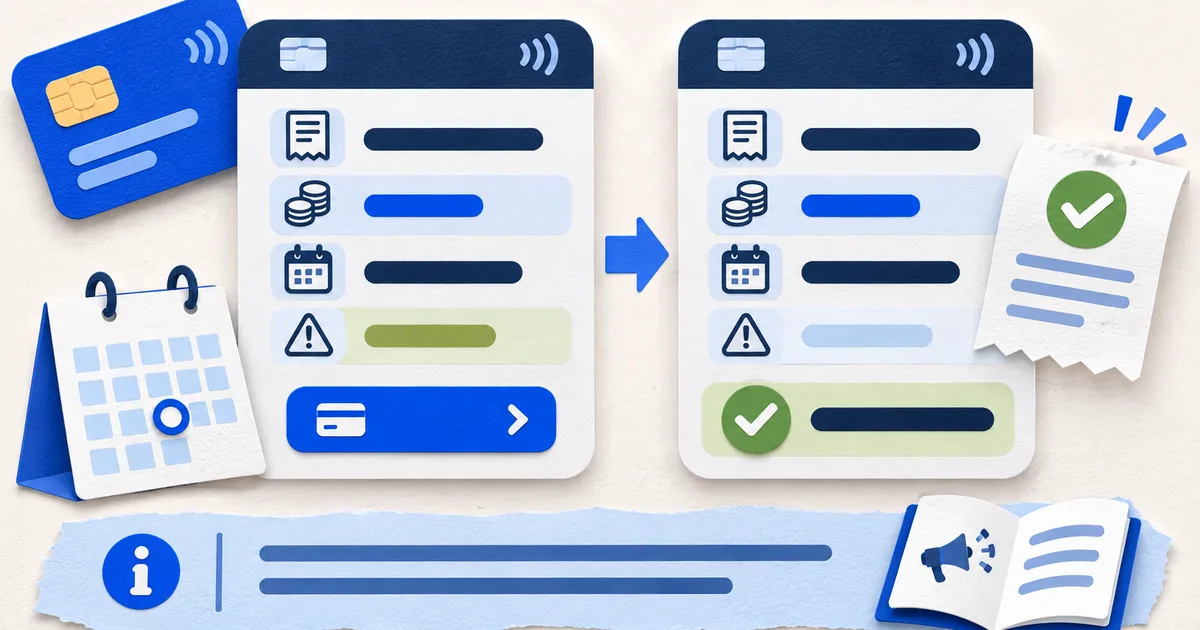
Fictional credit card payment box showing a minimum payment, due date, statement balance, and confirmation record
Original editorial artwork for this guide. Any depicted account details are fictional.

Use the right statement

  • If a corrected statement or arrangement exists, ask which instruction controls.

Read the payment box as a set

  • Note cutoff time, time zone, accepted methods, and weekend or holiday rules.

Run a payment readiness check

Complete this before relying on a schedule.

Statement

Suffix, cycle, version, and status.

Requirement

Minimum, past due, deadline, cutoff, and method.

Decision

Chosen amount and reason.

Funding

Source, available funds, schedule, and confirmation.

Follow-up

Posting, exception, issuer case, and review.

Choose an amount

  • Do not present the minimum as a recommendation; it is an account requirement.

Schedule with margin

  • For autopay, confirm amount rule, date, source, and how manual payments affect the debit.

Confirm the result

  • If payment is difficult or missing, contact the issuer early through an official channel.

  • Confirm the card suffix, cycle, statement version, and current account status before reading the payment box. Copy minimum payment, due date, past-due amount, new balance, cutoff time, time zone, accepted methods, and any special-plan requirement. A prior PDF or current-balance screen can show legitimate numbers that do not control this cycle's minimum obligation.

  • Separate required amount from chosen amount. The minimum is an issuer requirement, not a general recommendation, payoff plan, or promise to avoid interest. A larger payment can reduce a balance faster, while a full statement-balance payment may have a different purchase-interest effect under the agreement. Keep the decision within verified cash flow and current issuer terms.

  • Build a chain for scheduled, submitted, funded, received, and posted states. Record source account, chosen amount, schedule date, confirmation, source debit, card posting, and any return. Automatic payment enabled is not the same as a completed payment, and a manual payment may or may not modify the scheduled debit. Review both to avoid missed or duplicate payment.

Payment lab: prove that the right amount was scheduled for the right deadline

Allow appropriate processing margin and keep sufficient funds in the source account until settlement. Check how weekends, holidays, and cutoff clocks affect the method. If the deadline is near, use the issuer's official instructions rather than a general estimate. Do not test routing by sending a second payment until duplicate-payment risk and destination are understood.

After the expected posting time, verify credited amount, effective date, remaining past due, fee or interest effect, and available credit. If anything differs, preserve the statement and payment evidence and open an issuer case. The completed record should explain both the original obligation and how it was satisfied, not merely retain a screenshot of the schedule screen.

Keep reminders privacy-conscious. A calendar entry can state that a card review is due without including a full balance, account number, or transaction list. Protect device notifications and shared calendars. The operational goal is to surface the deadline and confirm posting while limiting the financial information exposed outside the issuer and controlled workspace.

If the account offers a due-date change, document when the new date becomes effective and how a transition cycle is handled. Do not apply the requested date to a statement already issued unless the issuer confirms it. Check the next payment box and automatic-payment schedule, since a date change can alter cycle length and comparison with prior months.

Document any issuer assistance or alternative arrangement separately from the ordinary payment box. Record its effective period, required amount, due date, confirmation, and controlling communication. Do not assume that a conversation permanently changes future statements. Check each new cycle and keep the arrangement evidence restricted. A payment plan can affect interest, account access, or reporting in ways that require issuer-specific explanation.

At the next cycle, compare the planned amount with the actual posting and new payment box. This feedback confirms whether the schedule, source funding, and issuer processing worked as intended. Carry forward only unresolved exceptions; do not copy last month's minimum or deadline into a new plan without reading the newly issued statement.

If the statement includes a long-term repayment illustration, interpret it with the minimum payment warning box guide rather than treating the example as a new bill.

Recreate the printed rule with the credit card minimum payment calculator and compare the estimate with the issuer's actual required amount.

Continue this evidence trail with Credit Card Statement Reading learning path, where the complete set of decisions and controls is organized together.

Continue with a statement review

When the evidence is ready, use the minimum and due-date review while keeping the issuer document as the control record.

Open the related tool