
Credit Card Activity Summary for One Billing Cycle
This summary rebuilds one card cycle from the previous balance through new charges and borrowing costs to payments, credits, and the new balance. It does not measure income, savings, or total household spending.
Previous balance and new chargesminusPayments and creditsequalsNew statement balance
Build your activity summary
One statement · balance activity summary
Preparing your private analysis
Your statement is being secured before analysis begins.
Leave this window open; your private results will load here when ready.
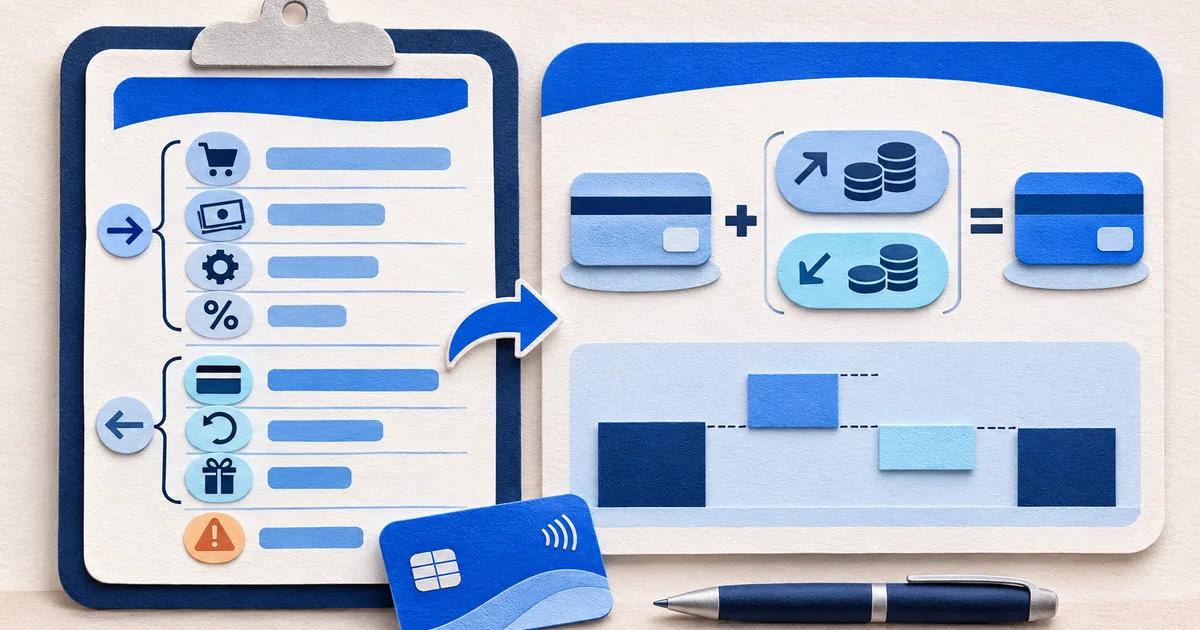
An activity summary with visible boundaries
The amounts below exist only to demonstrate the balance bridge and are unrelated to an uploaded file.
Set the boundary
The source covers one card account and one closed period. It omits cash purchases, other cards, bank balances, income, and pending events.
Use the summary to explain liability movement, not to declare affordability or whole-household cash flow.
Build totals by role
Keep purchases, advances, transfers, fees, and interest on the addition side; keep card payments, merchant credits, and approved adjustments on the reduction side.
Link every subtotal to its member rows and leave unknown signs or categories outside approved totals.
Example: spending rises while the balance falls
A large card payment can reduce the closing balance even when the cycle contains more purchases than the prior period.
Showing purchases and payments separately explains both facts without calling the lower balance a reduction in spending.
Summary release conditions
- The account, currency, and cycle are complete.
- Each subtotal has source rows.
- Payments are not counted as purchases.
- Refunds and reversals link to their events.
- The reconstructed new balance matches or carries an explained variance.
Explain timing differences
A payment can leave a bank account before it posts to the card, and a refund can settle in the next cycle.
Record open timing items rather than altering the issued period to match a later live balance.
Keep the bridge reviewable
Save the prior balance, each activity subtotal, the new balance, unresolved value, source pages, and reviewer decision together. If a total changes, identify the rows and reason instead of replacing the earlier result.
Use a separate household record for income, bank liquidity, cash purchases, and other cards. The card bridge remains a focused explanation of one revolving liability during one closed cycle.
Date the completed bridge and retain the unresolved-row list so a later live balance or corrected statement cannot silently replace the basis of the original cycle review.
Continue checking the card cycle
How to Compare Credit Card Statements Month to Month
A useful period comparison explains why balances and costs moved instead of placing two totals side by side.
Credit Card Statement Balance vs Current Balance: Reconcile the Gap
The statement balance freezes the account at cycle close. The current balance changes as later activity posts. A dated bridge explains why both can be correct.
How to Review Credit Card Statement Fees and Interest
A card cost or adjustment should connect to a named event, disclosed rule, balance category, and place in the statement balance equation.
Review the balance-bridge method
The method keeps charge classes, payments, credits, costs, posting states, and unresolved rows traceable.