
Credit Card Reconciliation and Bookkeeping Workflows
This path turns statement evidence and ledger entries into a controlled matching process rather than a forced zero difference.
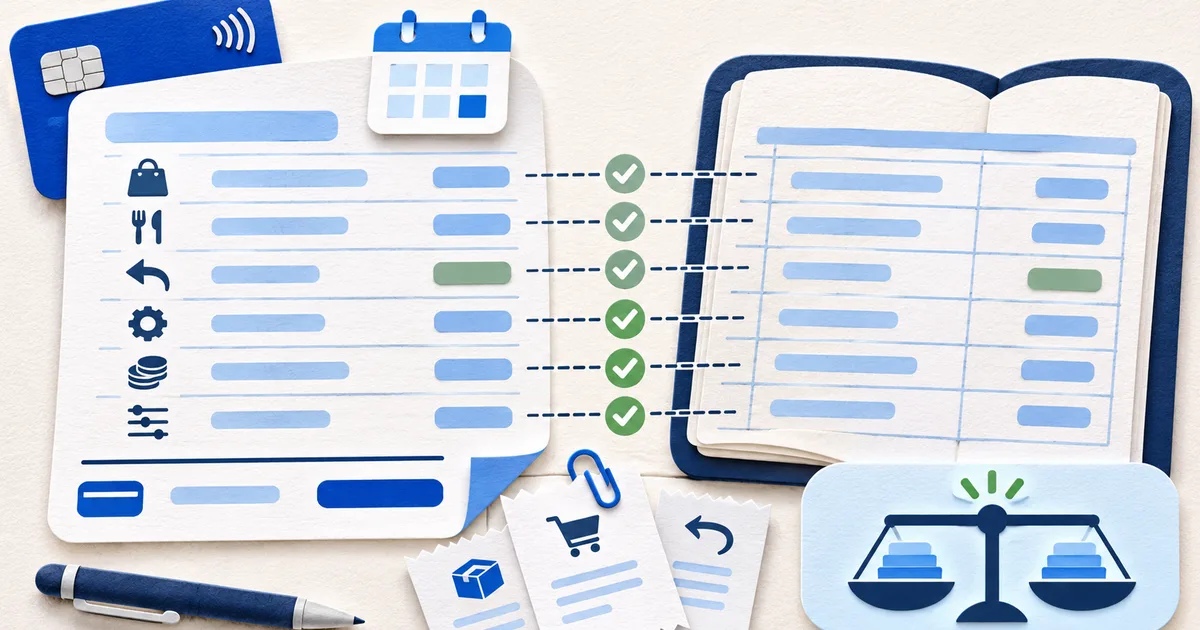
Scope of Credit Card Reconciliation and Bookkeeping
It covers period alignment, account identity, row matching, card-payment transfers, refunds, fees, interest, opening and closing liabilities, and exception ownership. Tax or business purpose requires separate support.
Align the two populations
Use the same card account, currency, cutoff, and inclusion rules before comparing totals.
Match events, not convenient amounts
References, direction, dates, source descriptors, and economic purpose should support every link.
Close each difference independently
Timing items, omitted entries, duplicates, and corrections need their own evidence and closure state.
Questions to answer before moving on
Completion means the remaining difference is zero for supported reasons, not because offsetting errors or plug entries were allowed.
- Do the statement and ledger use the same account and cutoff?
- Does every match have more support than an equal dollar amount?
- Who owns each open exception and what evidence will close it?
Choose a credit card reconciliation and bookkeeping guide
Open the guide that matches the decision or exception in front of you. Each page preserves its own source boundary and practical workpaper.
Begin with Credit Card Statement Reconciliation From Source to Books when that question matches the statement in front of you. Credit card reconciliation proves that every statement event is represented once in the books and that every book entry assigned to the card has statement support or a named timing reason.
Credit Card Statement Reconciliation From Source to Books
Credit card reconciliation proves that every statement event is represented once in the books and that every book entry assigned to the card has statement support or a named timing reason.
How to Match a Credit Card Statement to Bookkeeping
Match statement and bookkeeping rows by event, not by a convenient amount. The account, direction, timing, currency, and supporting record should tell one consistent story.
How to Review Credit Card Transfers, Refunds, and Reversals
Rows that fund, move, or undo money need an event identity before they receive a spending category.
Test the method on an authorized statement
Apply the checks from this path to a statement you are authorized to process, and keep every conclusion connected to the issuer record.
Close differences from evidence, not netting
Align account, currency, cutoff, and population first. Match direct events with references and direction, then use supported grouped matches for net settlements or split payments. Classify every remaining item as timing, omitted entry, duplicate, correction, wrong account, or unresolved rather than posting a convenient plug.
The close package should contain printed and ledger balances, matching schedule, adjustments, open-item aging, evidence references, owner, and approval. Carry timing items forward from their original dates and link later clearance to the first exception so no difference disappears merely because a new period began.
Maintain an exception schedule instead of hiding differences inside a net adjustment. Each line should name the statement row or ledger entry, amount, direction, likely cause, supporting record, owner, expected clearing date, and status. Review old items from their original date until they clear, are corrected, or receive a documented explanation. A zero total is not sufficient when two unsupported errors offset each other. The close is credible only when each match and correction can be traced in both directions.