
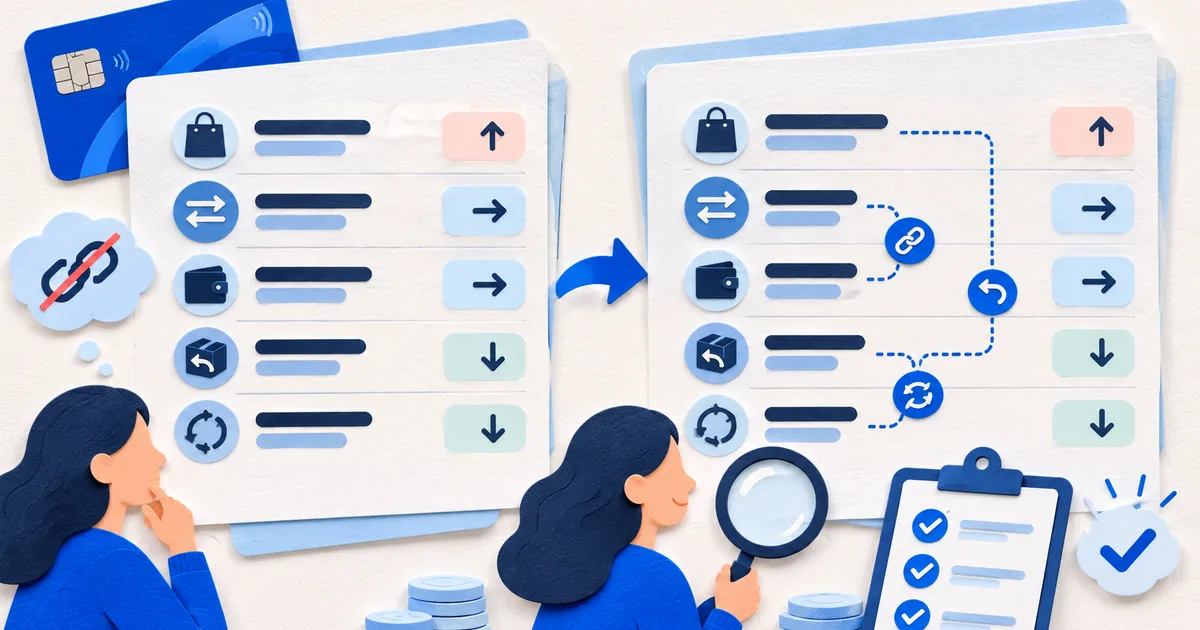
Name the event
Decide whether a row is a card payment, merchant refund, authorization reversal, chargeback, fee credit, balance transfer, or cash advance.
Use the exact description, direction, reference, nearby rows, and account on the other side. Keep an unknown class if evidence is incomplete.
Pair refunds with purchases
A refund normally reduces an earlier purchase; it is not fresh income. Link it by merchant, amount, reference, and expected timing.
Partial refunds and bundled orders may not equal the first charge, so preserve gross activity and net outcome.
Create a movement ledger
One row per event keeps corrections reviewable.
Source
Description, date, amount, sign, and page.
Class
Purchase, payment, refund, reversal, chargeback, or transfer.
Link
Original row, account, order, or dispute.
Effect
Spend, liability, cash movement, or correction.
Status
Matched, partial, pending, disputed, or unknown.
Separate reversals from settlements
An authorization reversal can release a hold that never became an expense. A posted purchase followed by a credit is a different history.
Compare status and posting dates before removing any row from analysis.
Keep payments outside purchase totals
A payment reduces the card liability. Counting it as an expense duplicates purchases already recorded on the statement.
Across bank and card accounts, link the bank withdrawal and card credit as one transfer with any date difference retained.
Close linked sets
Give each purchase, credit, and payment group a stable identifier and compare its net result with the expected settlement.
Leave unmatched events visible with an owner and follow-up date instead of forcing a neat report.
Take three superficially similar credits: a 500 card payment, a 75 merchant refund, and a 40 authorization reversal. The payment reduces the card liability and should link to the withdrawal from the funding account. The refund reduces an earlier purchase when evidence supports the relationship. The reversal releases or corrects an authorization and may never represent settled spending. One generic credit category hides all three economic roles.
For a transfer or payment pair, record both accounts, direction, dates, value, references, fee, ownership evidence, and confidence. Equal amount is only a clue. Weekends and processing can shift dates, while fees or currency conversion can make values differ. Keep an unmatched candidate visible until account identity and routing evidence support the link.