
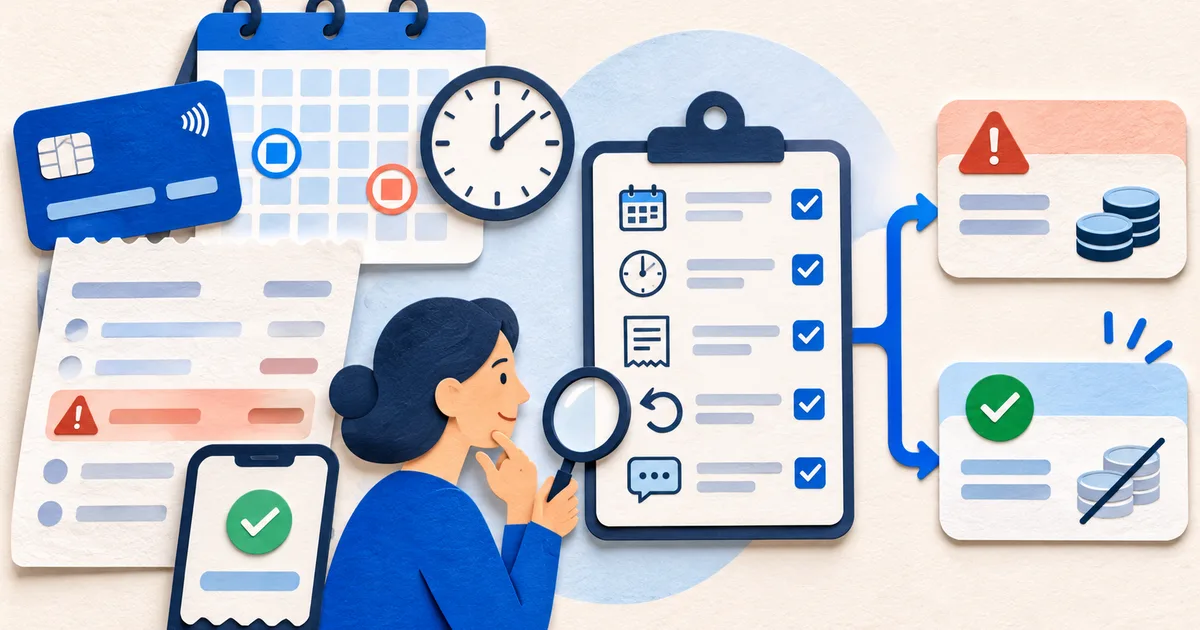
Fix the obligation in time
Record statement close, due date, minimum, cutoff, time zone, and any weekend instructions from the issuer.
Check whether a returned payment, past-due amount, or account arrangement changed the requirement.
Trace the payment
Capture amount, method, source, initiation, confirmation, issuer receipt, posting, and return status.
For automatic payment, verify the selected rule and successful funding rather than relying on an enabled setting.
Build a late-fee timeline
Order the facts before contacting the issuer.
Required
Minimum, date, cutoff, and instructions.
Attempted
Amount, method, source, and confirmation.
Received
Issuer receipt, posting, return, and explanation.
Charged
Fee, interest effect, notice, and terms.
Resolved
Case, credit, effective date, and control change.
Read the fee event
Locate fee amount, posting date, description, and related interest or rate notice.
Compare the event with the agreement and current disclosures for this account, not a generic fee article.
Ask for documented review
Use an official issuer channel, present the timeline, and ask how it determined lateness.
Record representative, time, case number, explanation, and promised adjustment.
Verify the resolution
Check subsequent activity for the exact credit, effective date, interest effect, and account status.
Keep the original fee row and update payment controls after the case closes.
Fix the obligation first. Copy statement close, required minimum, past-due amount, due date, cutoff time, time zone, accepted method, and weekend or holiday instructions. Check whether a returned payment, earlier past-due amount, special plan, or corrected statement changed the requirement. Memory of the usual due date is weaker than the issued cycle's actual payment box.
Trace the attempted payment through amount, method, source, schedule time, submission, confirmation, source debit, issuer receipt, card posting, and return status. Automatic payment being selected does not prove sufficient funds or successful processing. A manual payment can also affect the scheduled debit, so retain both instructions and the issuer's displayed treatment.
Record the fee as its own event with amount, posting date, descriptor, statement section, and any linked interest or penalty-rate notice. Compare the card agreement and current account disclosure. A general article or another issuer's fee limit cannot determine this account's outcome. Keep any jurisdiction-specific question separate for qualified review.
Ask the issuer for a documented explanation through an official contact route. Present the timeline, request the basis for lateness, and provide only necessary evidence. Record agent, contact time, case number, promised action, and whether a credit is described as correction, waiver, or courtesy. Those outcomes can have different implications and should not be merged.